Adaptation and reemergence: the future of International Organizations
23/11/2025
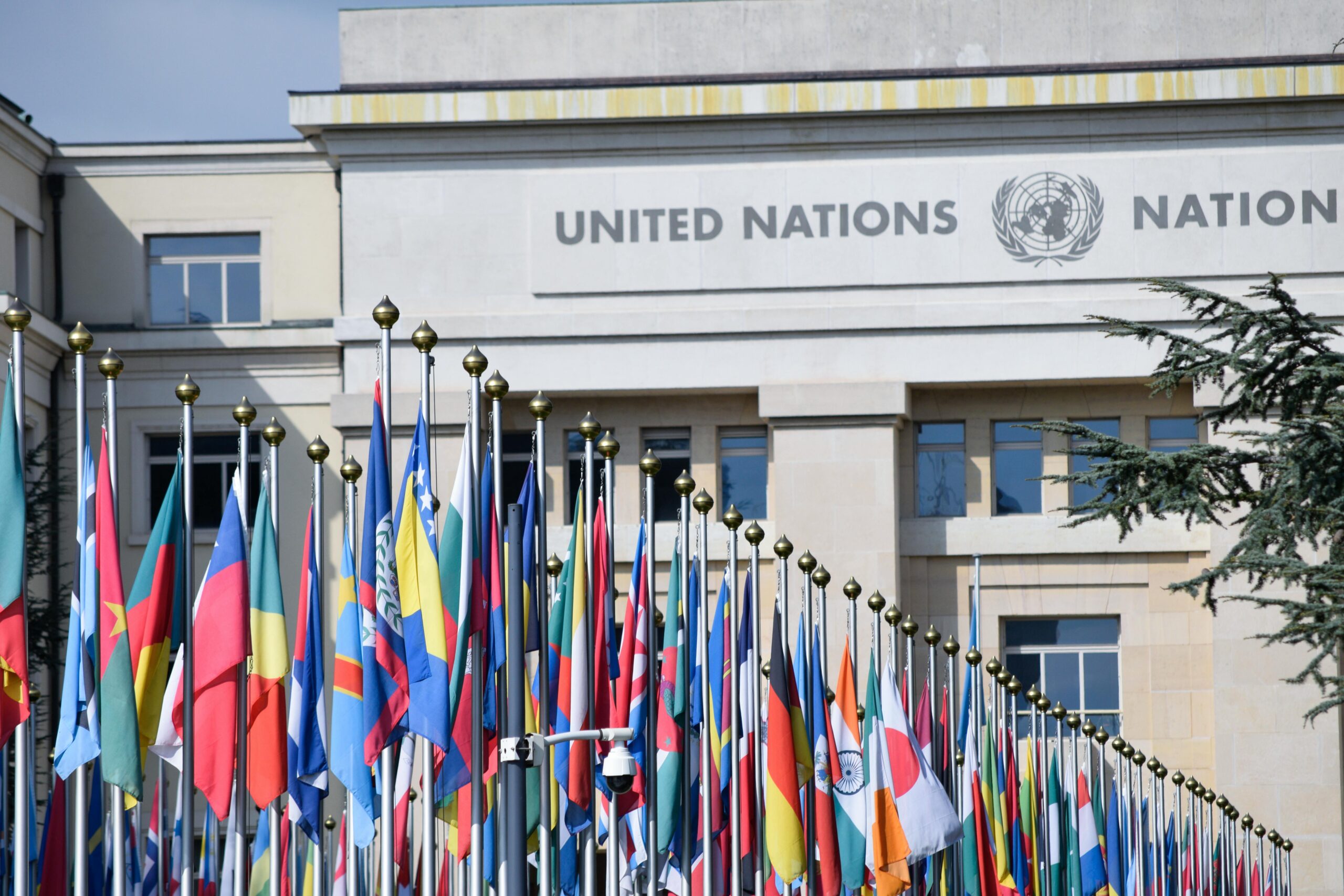
Analysts of the new world order seem to assume that, in this era of global affairs, international organizations (IOs) are destined to become shells of their former selves. Hollowed-out structures without agency and weight of their own. And, while it is true that some IOs are seeing their capacities diminished and their goals repurposed, I argue that their place as conduits of international relations will continue as the multipolar order unfolds. The multiple shocks created by two American administrations disengaging from multilateral bodies, the exclusion of Russia from two of the few IOs it shared with the West, the profound funding crisis at the United Nations and the ensuing reform process paint a pessimistic picture of IOs at the end of 2025. The architecture of Western-created global governance seems to be trembling.
But major international organizations are also large bureaucratic machines. We cannot expect that this transformation will see them extinguished. It is exceptionally rare for an international organization to actually disappear. They are notoriously “sticky,” bound by legal charters that make dissolution a diplomatic nightmare and sustained by the inertia of vested interests. For scholars studying the post-liberal order, the critical story is not the rare instances when an IO formally ceases to exist (less than two dozen in modern history), but the more subtle ways in which they decline. Their persistence as institutions can mask a creeping irrelevance. The real story is their slow slide into institutional zombification, a state in which they continue to exist, fly their flags, and hold their meetings, but cease to truly matter.
This occurs when states no longer find them useful for coordinating technical solutions, addressing political controversies, or running diplomatic campaigns. IO secretariats know this and try to remain relevant by attracting political discussions into their fora. This is visible, for example, in the nascent efforts to govern artificial intelligence. Arguably, AI demands global regulation just as civil aviation, nuclear weapons, or maritime law once did. The European Union enacted last year the first-ever international AI legislation, and the Council of Europe proposed the first Framework Convention on AI. But while the EU is an organization that brokers some of the most vital interests of its member states, the Council of Europe is among those IOs seeking relevance. The Convention opened for signature last year but has not yet been ratified by anyone. It appears less like a regulatory instrument and more like an attempt at gaining visibility. It does not address AI weaponization, for example, and, because of the organization’s exclusively Western membership, it cannot serve as a global standard. Instead, it merely reflects geopolitical fragmentation.
The lack of political centrality of some IOs is also explained by the emergence of other engagement formats: ad hoc coalitions, or “mini-laterals.” From the Quad and AUKUS to various “contact groups” for specific crises, these flexible, exclusive formats are the new tools of choice. Their appeal is obvious: they bypass the vetoes and inertia of the formal system. But this efficiency comes at a high price. The proliferation of ad-hoc groups deinstitutionalizes the established order. Each time a coalition handles a crisis within an IO’s mandate, it erodes the IO’s authority and diverts political resources from it. This creates a vicious cycle: as IOs become less effective, states rely more on ad hoc groups, which, in turn, make the IOs even weaker.
The management of a crisis is a particular stress test for the relevance of IOs. Covid was an accelerating moment for the perceived decline of IOs. China’s pandemic-era vaccine diplomacy favored a bilateral approach, largely eschewing designated multilateral channels like The World Health Organization. The Ukraine war, in turn, was the final nail in the coffin of the political standing of the Organization for Security and Co-operation in Europe.
Does this trend signal the end of international organizations? Not necessarily. Many IOs have lost political relevance and fallen into zombification long before the current change of tide in the geopolitical arena. About a dozen organizations in Africa, Latin America, and Central Asia would easily fit this category. What is different this time around is that those being stripped of authority and sometimes membership are major Western-led organizations of the United Nations system. NATO is also a case of this, although an ill-fitting one. It continues to be pulled by opposite forces that reinforce its centrality while being rhetorically marginalized. Some analysts argue that without explicit United States support, the organization will slide into irrelevance; however, the recent accession of Sweden and Finland is significant and challenges this view. If European leaders remain committed, NATO can survive US abandonment and re-emerge as a European pact for the containment of Russia. All in all, even if we conclude that many IOs today are being hollowed out, this is not the end of multilateralism; it is the end of a specifically Western-dominated iteration of it.
There are reasons to believe that this decline in the international standing of IOs will eventually be reversed, in most cases through the very same institutions that now seem questioned. The fundamental reason is that the core problems that IOs were created to solve—international trade, natural resource management or financial contagion—are not going away. States still require coordination and the processes that are possible inside an international organization (repeated consultations, technical discussions and others) are very costly outside of it. But most importantly, these organizations remain the most accessible avenues for projecting soft power and legitimizing state action.
As easy as it is to find organizations struggling for relevance, it is also possible to find those whose halls are filled with important political exchanges. In Asia there are a few instances. The Shanghai Cooperation Organization is a good example of this but there are others. The current rise of Turkey on the international stage, for example, is apparent in its renewed investment in the Organization of Turkic States, through which it aims to bring Turkic-speaking countries into its orbit, and in its activism in the Organization of Islamic Cooperation.
We must also dismantle the myth that multilateral cooperation via international organizations is a modus operandi exclusive to liberal democracies. There are numerous examples (and a substantial body of academic literature investigating them) of autocracies utilizing international organizations for coordination and power projection. For instance, in 2004, Hugo Chávez established the Bolivarian Alliance for the Peoples of Our America (ALBA), an organization intended to function as an ideological and structural alternative to the US-led Free Trade Area of the Americas (FTAA).
This strategic calculus is also clearly evident in China’s posture beyond regional organizations. Beijing’s approach is not trying to replace the United Nations, but rather to insert its own political rhetoric into it. President Xi Jinping’s Global Governance Initiative, presented in September, does not advocate against the relevance of the United Nations. On the contrary, it explicitly calls for it to remain the “core of global governance” and for safeguarding its “authority” and “irreplaceable, key role.” As the UN undergoes reforms and cuts, China perceives an opportunity to fill the resulting institutional vacuums.
International Organizations are not going to disappear. Their very nature as public institutions and the necessity that States have of them will ensure their continuity. It is also cheaper, in political terms, to recycle existing institutions rather than to create new ones. The “shell” itself: the legal mandates, the voting mechanisms, and the bureaucratic apparatus, might continue even if they reemerge led by the political investment of China or a middle power with regional ambitions. The new era will be defined not by the absence of these conduits, but by the political struggle to control them.
References
Destradi, S. (2020). “Ad hoc Coalitions in a Changing Global Order.” GIGA Focus Global, No. 4. GIGA German Institute of Global and Area studies.
Lang, K. & Le Drian, J-Y. (2021). “Podcast: How Ad Hoc Coalitions Deinstitutionalize International Institutions.” NUPI Podcast. Norwegian Institute of International Affairs.
Norwegian Institute of International Affairs (NUPI). (n.d.). “Ad Hoc Crisis Response and International Organisations (ADHOCISM).” Project Page. Accessed September 27, 2025.
“Reforming the UN during a financial crisis: A Foreseeable Failure to Align Money, Mandates, and Majorities” https://www.globalgovernance.eu/publications/reforming-the-un-during-a-financial-crisis-a-foreseeable-failure-to-align-money-mandates-and-majorities
Debre, M.J. and Dijkstra, H. (2022). Are international organisations in decline? An absolute and relative perspective on institutional change. Global Policy, 14(1), pp.16–30. doi:https://doi.org/10.1111/1758-5899.13170.
Hylke Dijkstra, Debre, M.J. and Heinkelmann-Wild, T. (2023). Governance abhors a vacuum: The afterlives of major international organisations. The British Journal of Politics and International Relations. doi:https://doi.org/10.1177/13691481231202642.
Graham, T. (2024). From the Ukraine Conflict to a Secure Europe. [online] Council on Foreign Relations. Available at: https://www.cfr.org/report/ukraine-conflict-secure-europe#chapter-title-0-3
World Health Organization (n.d.). About WHO in China . [online] www.who.int. Available at: https://www.who.int/china/about-us.
De Soysa, I. and Vadlamannati, K.C. (2024). A friend indeed to friends in need? China’s trade regime and Covid-19 vaccine diplomacy. China Economic Quarterly International, 4(3), pp.212–226. doi:https://doi.org/10.1016/j.ceqi.2024.09.001
Debre, M.J. and Dijkstra, H. (n.d.). Are international organisations in decline? An absolute and relative perspective on institutional change. [online] Global Policy. Available at: https://www.globalpolicyjournal.com/articles/global-governance/are-international-organisations-decline-absolute-and-relative#:~:text=There%20is%20a%20lot%20of,to%20international%20relations%20since%201996.
Dijkstra, Dr.H. (2024). Multilateralism amid Geopolitics Citation for published version (APA). [online] doi:https://cris.maastrichtuniversity.nl/ws/portalfiles/portal/203667091/UM240045_Oratie_Hylke_Dijkstra_BINNENWERK.pdf
Al-Rawashdeh, M. (2019). The Role of International Organizations in published 2024. [online] Available at: https://garymarks.web.unc.edu/wp-content/uploads/sites/13018/2021/03/hooghe_lenz_marks_2019_A-Theory-of-International-Organization.pdf
Jofre Rocabert is the CGI research director. He holds a PhD in politics by ETH Zurich and is a humanitarian worker.
—-
The opinions expressed in this publication are those of the authors. They do not purport to reflect the opinions or views of the CGI or its contributors. The designations employed in this publication and the presentation of material therein do not imply the expression of any opinion whatsoever on the part of the CGI concerning the legal status of any country, area or territory or of its authorities, or concerning the delimitation of its frontiers.