Italy’s strategy in the expanded Mediterranean
22/08/2026
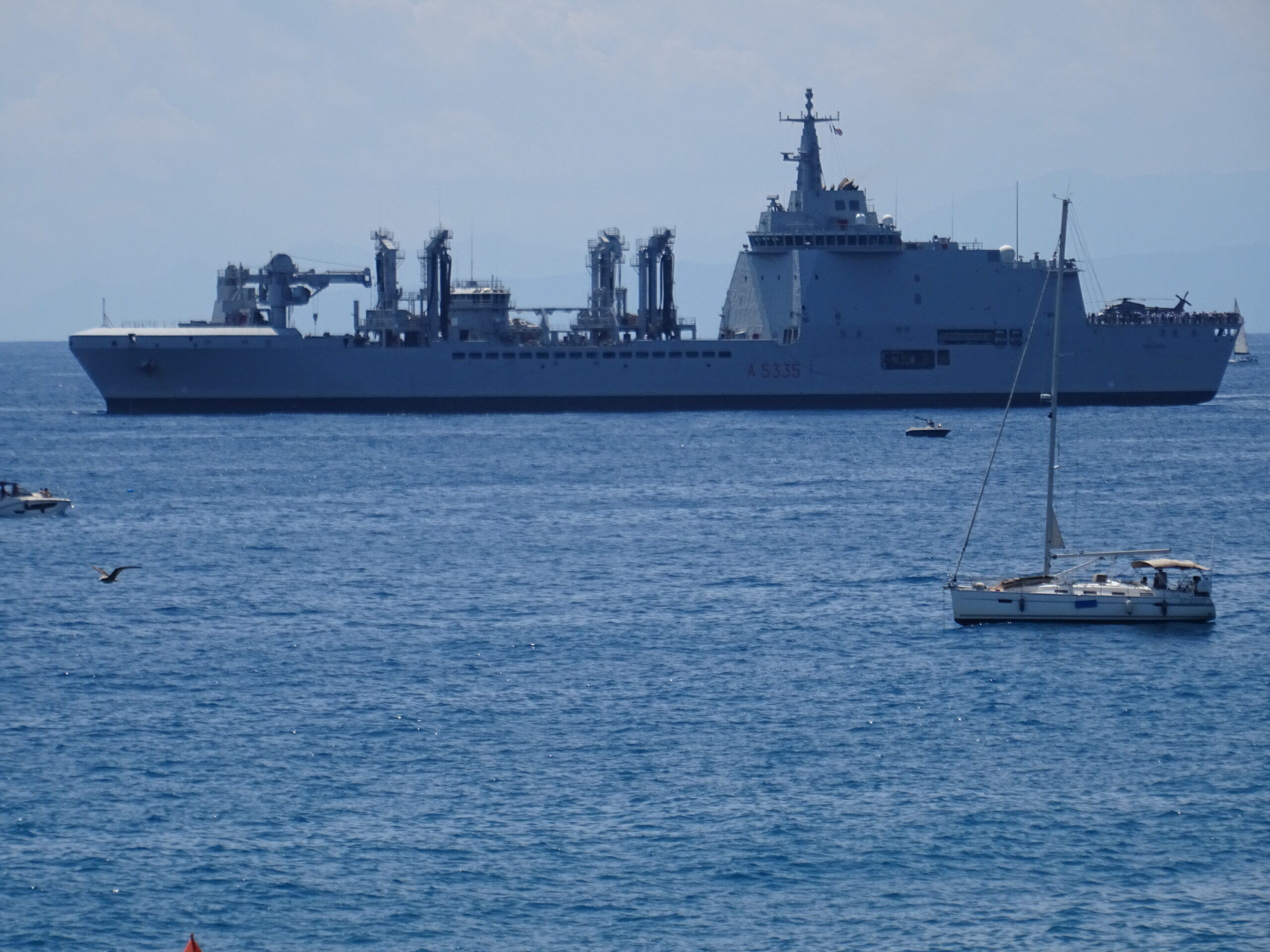
To dominate the world, one must dominate the sea. The maritime geopolitical dimension is today a key priority for restoring global security and stability: the Strait of Hormuz is a clear example. Never before has the importance of the sea in ensuring security and economic prosperity been so evident. The imperative mission of the global order. To dominate the sea largely involves controlling the straits, that is, the main maritime bottlenecks —the so-called chokepoints. Thus, the ability to control one or more of these transit points is a sine qua non for exercising dominion over the seas.
At the heart of global maritime traffic routes lies the Mediterranean Sea. The ancient Mare Nostrum still maintains a strategic centrality as a connecting axis between oceans and has, in fact, become a vast strait with the potential to act as a chokepoint in its own right. It is a key transit zone between the Atlantic and the Indo-Pacific, an ‘expanded Mediterranean’ that, from a geo-strategic perspective, extends beyond Suez and Gibraltar, its two entry and exit points to the east and west.
Italy and the Mare Nostrum
Italy’s current relationship with the sea is one of the many great paradoxes of the transalpine country. Italy is a predominantly maritime territory that, paradoxically, since its unification, has had a mainly anti-maritime geo-strategic position. The main reason is that the political class that unified the country had a landlocked origin. It was the Savoys and the Piedmontese from the Alps who forged the Unità in opposition to the Mediterranean states of the Kingdom of the Two Sicilies, which included the former Kingdom of Naples. The new Kingdom of Italy under Savoyard sovereignty, with a northern ruling class opposed to any maritime projection, implies a voluntary renunciation of the Italians’ long-standing maritime vocation.
Here is the great paradox: the Italians’ entry into the “book of honour” of human history is due, in large part, to the sea. From Magna Graecia to the Roman Empire, which consolidated its power by turning the Mediterranean into the Mare Nostrum after defeating Carthage, its great rival. Rome obtained the maritime control that guaranteed its hegemony over all shores, European and African. From the Pillars of Hercules at Gibraltar to the obelisks of Egypt, the vast majority of which are in the city of Rome, having arrived by sea.
With the decline of Rome, centuries later, the maritime protagonism passed to the four Maritime Republics—Pisa, Amalfi, Genoa and, above all, Venice—which culminated in the Serenissima, the true epitome and paradigm of maritime power. For centuries, Venice was the gateway to the East, with enormous control over the waters of the Adriatic and the eastern Mediterranean, thanks to a sophisticated commercial and diplomatic network and, ultimately, a military one as well.
As we have noted, Italy’s maritime dimension has often been underestimated in the political strategies of successive Italian governments, despite its centrality. However, the Belpaese has exceptional geo-strategic value due to its position at the heart of the Mediterranean. It is and has been a maritime country, part of a Mediterranean Sea that has become a central focus in economic, social and security policy priorities within the European Union and the Atlantic Alliance. This contradiction—a country projecting itself towards the sea while denying its maritime character—has begun to be gradually reversed since the 1980s.
First, in the military sphere, where the geo-strategic theory of the ‘Broader Mediterranean’ was born. Second, because this concept has evolved from a theoretical category into a geographical and political reality, materialised in strategic initiatives such as the Piano Mattei for Africa, promoted by the current Italian government.
In terms of security, Italy has an urgent need to control the waters of its ‘fourth shore’, that is, the space that connects the southern border with North Africa. In the economic sphere, its industrialisation—built on the import of raw materials and the export of manufactured goods—has made the sea and the trade flows arriving at its ports a strategic asset of the first order. This has made it, willingly or not, an economy deeply dependent on the sea. Beyond the number of ports, the length of the coastline or the size of its merchant fleet, the reality is clear: Italy will be maritime, or it will not be.
Geopolitical theory and logic of the extended Mediterranean
Since the American Navy officer Alfred Thayer Mahan published The Influence of Sea Power upon History in 1890, a foundational work on the power of the seas, maritime-minded countries have developed theories to project their influence at sea in accordance with their national interests. In the Italian case, the geopolitical theory of the Mediterraneo Allargato, or the extended Mediterranean, stands out, being one of the most solid contributions to maritime strategic thought by geographical areas. This doctrine was formulated in the early 1980s at the Accademia Navale di Livorno by Rear Admiral Pier Paolo Ramoino, within the framework of studies by the Marina Militare and NATO. The concept responds to the need to go beyond the strict Mediterranean and position it as the central hub of a multidimensional geopolitical network. Thus, it is not just a geographical expansion but a system of connections that integrates areas of strategic interest —military, political, economic and cultural— with a direct impact on Mediterranean security and interests.
This expanded geographical area encompasses an area of interest stretching from the Atlantic Ocean —including the Canary Islands, the Strait of Gibraltar and the western coast of North Africa to the Gulf of Guinea— to the Sahel and sub-Saharan Africa, key regions for migratory flows and security. To the east, it extends through the Middle East —the Red Sea, the Horn of Africa, the Arabian Peninsula and the Persian Gulf— and connects to routes towards the Indian Ocean and the Indo-Pacific; while to the northeast, it integrates the Black Sea and the Balkans, with projections that can reach from Mozambique to the northern regions of Europe and even beyond Iceland in the Arctic context.
This ‘Broader Mediterranean’ is fundamental because it concentrates essential maritime routes for trade and energy transport—especially oil and gas—between the Middle East, Africa and Europe, elements vital to Italy’s energy and economic security. At the same time, it is a key area of international security, marked by dynamics such as terrorism, transnational crime and geopolitical crises, with a direct impact on Europe and on a global scale. Overall, it reflects an interconnected geostrategic reality in which any event in one of its areas has repercussions for both national and international stability and balance.
The geopolitical framework of the southern Mediterranean
The current situation in the southern Mediterranean is an additional factor that directly affects Italy within the framework of the ‘Broader Mediterranean’. These conjunctural elements must be taken into account when translating geopolitical theories into concrete policies and government actions.
Furthermore, a key structural factor must be considered: the progressive transformation of maritime spaces into objects of geopolitical dispute, known as the ‘territorialisation of the sea.’ This process is materialised in the application of Exclusive Economic Zones (EEZs), which grant coastal states exclusive rights over natural resources up to 200 nautical miles from the coast. In other words, it involves establishing borders at sea, which generates tensions and conflicts. In the case of the southern Mediterranean and the coasts of North Africa, these dynamics have a direct impact on Italy and its strategic interests.
The first factor explaining the current geopolitical configuration of the southern Mediterranean is the United States’ growing disinterest in the Mare Nostrum, which has become a secondary thought in its strategic priorities. Washington has shifted its focus to the Indo-Pacific in the face of China’s rise as a maritime power, creating a power vacuum in the Mediterranean. This vacuum has fostered the emergence of revisionist dynamics among regional powers, a trend that intensified with the fall of Gaddafi’s regime in Libya. The destabilisation of this country —a former Italian colony— has turned it into a fragile state and opened the door to new actors capable of altering regional balances, with a potential direct impact on Italian interests, especially in terms of energy security and political and social stability. Consequently, a geopolitical reading of the region reveals the presence of both traditional and emerging actors that structurally limit Italy’s ability to exercise full dominance over this space.
The main risk for Italy today lies in Libya, on the doorstep of the Sicilian Channel, a country divided between Tripolitania and Cyrenaica. In the west, in Tripoli, the Government of National Unity receives support from Italy—mainly technical and logistical—and from an increasingly influential Turkey, which acts as a decisive military actor, while the United States observes from a distance through AFRICOM. In the east, in Benghazi, under the control of the Libyan National Army (LNA) of General Haftar, the Russian presence stands out — through the ‘Africa Corps’ and former personnel of the Wagner group. The LNA also receives support from Egypt and the United Arab Emirates. Added to this complex scenario are migratory flows from the Sahel and the Horn of Africa, often instrumentalised by human trafficking mafias in a context of failed statehood.
The Turkish presence also reflects its maritime geopolitical doctrine of the Mavi Vatan (“blue homeland”), which leads it to compete with Greece, Cyprus and Egypt for control of the EEZs and energy resources in the eastern Mediterranean, where Italy also has interests through the energy company ENI.
Another sensitive dossier for Italy is Algeria, both because of its claims to an Exclusive Economic Zone affecting the Sardinian Sea and Italy’s heavy reliance on Algerian gas, mainly transported via the Transmed pipeline. It is Italy’s main source of external energy supply, via the most important of the three energy infrastructures transporting gas to Italy. The other two are the TAP (Trans Adriatic Pipeline, which carries gas from Azerbaijan, connecting to the Trans-Anatolian Pipeline) and the Greenstream (which carries gas from Libya).
In the logistical sphere, China’s presence in Mediterranean ports is growing —with Piraeus and Tangier as the main examples, and with growing interest in Trieste— a development that introduces a new geo-economic dimension. Faced with this scenario of competition and structural constraints, Italy has opted to avoid confrontation and to strengthen its role through diplomacy, especially with African countries, while also promoting forward-looking policies to secure two fundamental strategic objectives: the security and stability of the southern Mediterranean shore.
Decline and practical implementation of the Extended Mediterranean: The Mattei Plan
Geopolitical theories generated in academic and military circles risk becoming mere splitting hairs if there is no political will to translate them into action. In Italy’s case, the doctrine of the ‘broadened Mediterranean’ has today found a concrete application in the Piano Mattei for Africa, promoted by Giorgia Meloni’s government. It is a strategic project of national interest which, taking into account the limitations of the country, the European Union and NATO, seeks to redefine relations with Africa through equal partnerships, overcoming an aid-based logic and fostering shared benefits.
The Mattei Plan for Africa is named after Enrico Mattei, founder and president of ENI, the major Italian state-owned energy company established in 1953. A key figure of the post-war era, Mattei transformed the oil sector by promoting fairer agreements with producing countries, based on his ‘formula’, which guaranteed them up to 75% of the profits, thus breaking the dominant model of Western multinationals. During his presidency, he established strategic relationships with several African countries, particularly Egypt, Libya and Algeria. Mattei was also a prominent ally of Algerian independence, defending the country’s sovereignty over its resources and supporting the National Liberation Front.
This legacy has consolidated ENI’s presence in Africa, where it is now one of the major energy multinationals, operating in 14 countries and accounting for a very significant share of its total production, thereby reinforcing Italy’s strategic role on the continent.
The Piano Mattei is structured around six main areas — education, health, water, agriculture, energy and infrastructure — and extends to other sectors such as culture, sport and innovation. Its philosophy is based on the active involvement of African countries in every phase of the projects to generate sustainable development and stability. Overall, the plan represents Italy’s attempt to turn its geopolitical vision into an effective strategy in the wider Mediterranean.
Catalonia and the Extended Mediterranean
Italy and Catalonia maintain an almost mirror-image relationship with the sea: both have historically built their wealth and influence on navigation and maritime trade. Barcelona, like Genoa or Venice, owed its development to commercial expansion in the Mediterranean and subsequently across the Atlantic, while Catalan contributions to maritime law —such as the Llibre del Consolat de Mar— and to navigation —with portolans, the Catalan Atlas or instruments like the astrolabe— were crucial. However, this past contrasts with the current lack of maritime awareness.
What lessons can the strategic framework of the extended Mediterranean and its geographical positioning offer for our country and its foreign policy? First of all, the sea is essential for global trade: around 90% of goods by volume and over 70% by economic value are transported by sea. For an open economy such as Catalonia’s, this makes it a key resource, regardless of the length of the coastline or the number of ports. Even landlocked countries, such as Switzerland, have become global logistics powers. Furthermore, Catalonia’s proximity to Gibraltar could represent a strategic advantage in the event of a crisis in other straits, while the opening of Arctic routes could alter the current centrality of the Mediterranean.
Secondly, the sea is a growing source of strategic resources. The “territorialisation” of maritime spaces with EEZs highlights their importance for energy security, both for hydrocarbons and for marine renewable energies — especially offshore wind, but also wave or tidal power. To this are added critical infrastructure such as submarine telecommunications cables and gas pipelines, as well as food and mineral resources largely yet to be explored.
Finally, in the field of external action, Catalonia has a significant opportunity with Barcelona as the headquarters of the Union for the Mediterranean, which allows it to aspire to a central diplomatic role within the ‘Broader Mediterranean’.
According to A. T. Mahan, the predisposition to become a maritime power depended on geographical factors such as position, physical configuration and territorial extent, combined with population size. But above all, it depended on the character of the peoples and the type of government. Today, one would have to add that the sea is, above all, about trade, energy and data, which in turn depend on free and navigable waters.
Together, both Italy and Catalonia can play a prominent role in this geo-strategic space of the ‘Broader Mediterranean’ if they know and are willing to reclaim their maritime vocation in order to remain two fundamental shores of this blue-sea bridge that is the Mare Nostrum.
Narcís Pallarès-Domènech is a political scientist and analyst in geopolitics and security. He has been a visiting professor at the Chair of Geography of Languages at the University of Rome Tor Vergata and head of external and institutional relations for the Delegation of the Government of the Generalitat of Catalonia in Italy. He contributes to various media outlets and radio stations.
The opinions expressed in this publication are those of the authors alone. They do not represent the views and opinions of the CGI or its collaborators. The designations employed in this publication and the presentation of the material therein do not imply any expression of opinion whatsoever on the part of the CGI concerning the legal status of any country, area or territory, its authorities or concerning the delimitation of its borders.