The war in Lebanon: is there a way out?
01/06/2026
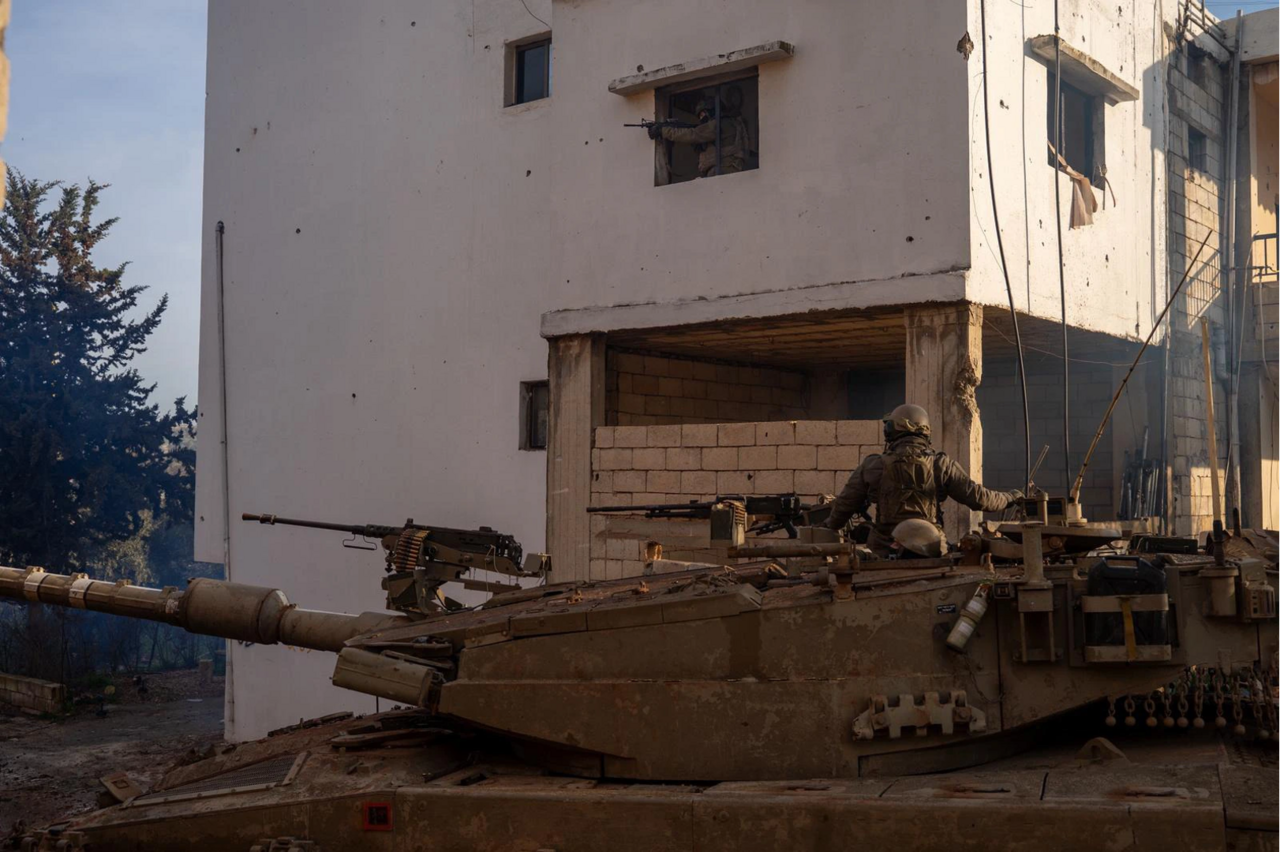
On March 2, 2026, Hezbollah launched rocket and drone attacks against Israel in response to the U.S.-Israeli strikes on Iran and the assassination of Iran’s Supreme Leader, Ali Khamenei. As a result, Lebanon was once again drawn into a wider regional escalation. In response, Israel launched an indiscriminate military campaign targeting Hezbollah’s infrastructure, killing thousands of civilians and destroying homes in the south, Beirut, the Bekaa Valley, and other regions. More than one million Lebanese have been displaced so far, and Israeli forces have pushed deeper into southern Lebanon, occupying additional villages and towns.
The escalation also triggered profound political repercussions inside Lebanon. The government condemned Hezbollah’s unilateral military actions, declared its military wing illegal, and insisted that decisions of war and peace are reserved solely for the state. After deadly Israeli attacks hit Beirut, the government announced that it would implement a policy declaring the capital an area “free of weapons.” These announcements also raised questions about the capacity and seriousness of the state to implement such policies. The United States, despite Hezbollah’s opposition, pressured the Lebanese government to negotiate directly with Israel. A U.S.-brokered ceasefire was reached on April 16, 2026—and renewed later—but violations and Israeli airstrikes continued, and southern Lebanon is still bleeding. Meanwhile, Hezbollah rejected direct talks and opposed any discussion of its disarmament, deepening polarization within Lebanese society. This internal fragmentation further exposed Lebanon’s diplomatic vulnerability during the negotiations. This article examines the reasons that pushed Hezbollah to launch rockets toward Israel, reflects on Israel’s indiscriminate strikes and military occupation in the south, reviews the status and process of the negotiations in Washington, and considers possible scenarios that may shape Lebanon’s political future.
What has gone wrong in Lebanon?
In November 2024, a ceasefire was signed between Israel and Lebanon; however, it soon proved unworkable, as it attempted to revive the implementation logic of UNSCR 1701 without resolving the key structural realities that had undermined that same framework since 2006. Brokered by the United States and France, the new agreement required Hezbollah to withdraw its fighters north of the Litani River; in return, the Lebanese government was obligated to deploy the army in that area and dismantle Hezbollah’s military infrastructure. Afterward, the Israeli army was to gradually withdraw from all occupied territories in South Lebanon. Yet the ceasefire was interpreted differently by each party. Israel insisted that it had the right to bomb Hezbollah targets (often killing civilians) and continued to violate Lebanese airspace. Hezbollah, by contrast, maintained that the agreement only required the withdrawal of its fighters south of the Litani River. Meanwhile, the party’s opponents claimed that the agreement called for the complete disarmament of Hezbollah and all non-state actors. Analysts immediately warned that the deal was “fragile and impossible to implement,” given limited state resources and its reliance on a weak Lebanese state apparatus incapable of monopolizing force in the south and other parts of the country.
Another reason for the failure was the absence of trust mechanisms capable of preventing rapid escalation after violations. Even the Mechanism (the monitoring body), which had been established as a forum where both sides could report violations and prevent escalation, failed to address the issue: Israel bypassed it and struck targets and assassinated Hezbollah military officials without notifying it. Within less than 48 hours of the ceasefire entering into force, both Israel and Hezbollah accused each other of breaching the agreement. The arrangement reproduced the classic “security dilemma” that has characterized the Israel-Lebanon border for decades: each side interpreted the other’s “defensive actions” as “offensive preparations” requiring preemptive retaliation. The Israeli army emphasized “enforcement” of the agreement, while Hezbollah argued that Israel was exploiting it to consolidate its military presence in the south. Most importantly, the Lebanese government lacked any deterrent to contain Israel’s ceasefire violations, leading many to question the role of the state and to perceive that it had abandoned the country’s south.
Finally, the ceasefire failed because it was negotiated as a temporary arrangement rather than as part of a broader political settlement addressing regional issues such as the Palestinian conflict, Iran’s nuclear file, and Iran’s relations with regional non-state actors. It is worth noting that Hezbollah had entered the fighting in October 2023 under the banner of “support for Gaza”—a stance rooted in ideological and principled commitments—meaning that the Lebanese front was strategically linked to a wider regional confrontation with Israel rather than confined to the Lebanese-Israeli border. At the same time, Lebanon’s internal political paralysis and financial difficulties limited the state’s ability to implement the agreement’s clauses, even though the Lebanese army announced that implementation south of the Litani was nearly complete and that internal dialogue was needed to move to the second phase, which would address the issue of weapons north of the Litani. Observers argued that the deal only postponed the conflict rather than addressing its roots.
Subsequent events in 2025 and 2026—which led to roughly 500 casualties on the Lebanese side through Israeli bombardment, drone strikes, airstrikes, and the destruction of villages in the occupied zones, in addition to the ongoing dispute over Hezbollah’s arms—demonstrated that the ceasefire lacked both domestic legitimacy and a sustained regional security framework. The launching of six rockets from the south toward northern Israel by Hezbollah therefore came as no surprise. It was framed as a response to 15 months of Israeli aggression and as retaliation for the assassination of the Iranian Supreme Leader, Ayatollah Ali Khamenei—thereby merging local and regional dynamics and once again regionalizing the Lebanese crisis.
The country’s south is bleeding
Since the start of the war, the Israeli military campaign in southern Lebanon has produced widespread environmental devastation, urban destruction, and demographic displacement that many analysts and legal experts describe as acts of “ecocide” and “urbicide.” Investigations in towns such as Bint Jbeil, Kfar Kila, and surrounding villages have documented the complete demolition of homes, schools, hospitals, and mosques. Satellite imagery and open-source investigations cited by Al Jazeera estimate that more than 70 percent of these towns have been destroyed. Agricultural areas have also been burned or contaminated by the use of white phosphorus, threatening long-term food security and environmental sustainability.
The patterns of destruction appear tied to a broader Israeli military objective of establishing a “buffer zone” emptied of its population. Investigations and mappings by Haaretz and The Guardian indicate that entire villages have been razed using explosives and bulldozers, in a strategy resembling earlier operations in Gaza. Indeed, several Israeli officials have openly stated their intention to replicate the “Gaza scenario” in South Lebanon. While Israeli military officials claim that they are destroying Hezbollah’s tunnels and military infrastructure, the reality on the ground shows that the scale and indiscriminate nature of the demolitions extend far beyond immediate military objectives and are aimed at reshaping the geography and demography of the border villages by preventing displaced residents from returning to their homes.
From the perspective of international humanitarian law, the Israeli military campaign may constitute war crimes against civilians in the south. Despite the U.S.-brokered ceasefire agreement signed on April 16, 2026, Israel continues its military operations in the territory. The war in the south reflects not only a counterinsurgency operation by Israel against Hezbollah but also, as mentioned above, an attempt to engineer a new security reality through territorial devastation and forced displacement.
The dilemma of direct negotiations
On the diplomatic front, Lebanon is facing immense diplomatic and military pressure to enter into direct negotiations with Israel, amid deep internal divisions over the nature of these talks, Hezbollah’s weapons, and the political future of the country. Both the United States and Israel have an interest in direct talks; however, each has a separate agenda and set of objectives. Within this framework of coercive diplomacy and asymmetric bargaining, Washington and Tel Aviv aim to frame any Lebanese refusal to engage in direct talks with Israel as grounds for attributing responsibility for future escalation to the Lebanese government. Such a strategy could provide Israel with the political pretext for launching a broader military campaign in Lebanon. Conversely, the prospect of negotiating “under fire” places the Lebanese government in a profound strategic dilemma. On one level, negotiations are conducted under preconditions and military pressure in which the Lebanese government lacks any bargaining cards. On another, the process deepens internal polarization and raises questions about the government’s legitimacy, with accusations of “capitulation” and “surrender of sovereignty,” as a large segment of society rejects any normalization with Israel—thereby weakening Lebanon’s diplomatic position at the negotiating table.
This dynamic reflects a classic case of a fragmented state operating under external pressure and internal contestation. Lebanon finds itself constrained between U.S.-Israeli demands, Saudi calculations and concerns that Lebanon may fall under Israeli influence, and sharp sectarian and political divisions at home. Diplomatic sources report that Saudi Arabia has voiced opposition to Lebanon joining the “Abraham Accords.” In this context, Lebanon appears trapped, lacking any strategic autonomy and exposed to foreign pressures—resulting in a further regionalization of its internal dynamics.
In these negotiations, the United States appears to be pursuing a distinct approach centered less on imposing predetermined outcomes and more on institutionalizing the negotiation process itself. Washington’s strategy reflects the idea of integrating Lebanon into an open-ended negotiating framework that can later be linked to wider regional normalization and security arrangements. To this end, the U.S. is employing coercive statecraft alongside certain economic and diplomatic incentives—such as promises of Israeli withdrawal and international assistance for reconstruction—to pressure the Lebanese side. However, these incentives are conditioned on commitments related to Hezbollah’s disarmament and the state’s monopoly on the use of force. In this sense, the United States aims to shape Lebanon’s security architecture and integrate it into a broader regional order aligned with U.S. strategic interests.
From the Israeli perspective, the ceasefire is not an end in itself or a tool for conflict resolution, but rather an instrument for changing the reality on the ground and reshaping the security environment in ways that favor Israel’s strategic interests. This approach also reflects Israel’s pursuit of territorial consolidation and long-term interests in South Lebanon. By establishing “security zones,” Israel is implementing the “Gaza scenario” and creating a “no man’s land” in the south. At the same time, Israel appears to rely on a multidimensional strategy of controlled escalation: first, by sustaining low-intensity military pressure designed to keep Lebanon in a state of continuous attrition; second, by holding the Lebanese state accountable for any deadlock in negotiations, particularly regarding the question of Hezbollah’s arms; and third, by instrumentalizing such deadlocks as justification for future military escalation (the deadly airstrikes on April 8 in central Beirut should be viewed from this angle). Beyond immediate territorial or tactical objectives, this strategy seeks to reshape Lebanon’s internal political landscape and align it with Israeli security imperatives, thereby imposing long-term political and security obligations on the Lebanese state. Such an approach is consistent with broader theories of security regionalism and hegemonic stabilization, whereby Israel’s military superiority is translated into political leverage that weakens the Lebanese state from within.
What may come next?
The trajectory of the Israeli-Lebanese talks in Washington could reshape not only border security in the south but also Lebanon’s domestic politics and regional positioning within an increasingly polarized and fractured regional order. Three potential scenarios emerge from this analysis:
- Managed de-escalation and conditional “normalization”
In this scenario, the talks in Washington would focus on border stabilization, implementation of the ceasefire agreement, and the start of a land-demarcation process. The talks would not involve diplomatic and economic normalization but would establish a security-management framework somewhat similar to the 1949 Armistice Commission between Lebanon and Israel. Relative security stability could encourage foreign investment and gradual post-war reconstruction and recovery. However, internal polarization would continue to shape Lebanese domestic policy, and internal negotiations over Hezbollah would have to address the future of its military wing—including whether it could be integrated into the state’s defense strategy.
- Frozen conflict with tactical negotiations
In this scenario, the Washington-based talks would produce a limited technical arrangement but fail to address the broader strategic dimensions of the conflict between Israel and Hezbollah. Clashes in the south would continue as Hezbollah preserves its deterrence and Israel continues to violate Lebanese airspace and assassinate Hezbollah fighters. Negotiations would become a crisis-management tool rather than a pathway to long-term stabilization. Lebanon would remain trapped in chronic instability and economic paralysis; reconstruction efforts would stay geographically limited; state institutions would continue to erode; non-state actors would emerge to fill the vacuum; and political fragmentation would deepen over questions of sovereignty, resistance, and foreign policy.
- Further escalation and regionalization of the conflict
This is the worst-case scenario: the talks in Washington collapse, war between the United States/Israel and Iran resumes, and the Israeli-Lebanese conflict escalates into a larger regional war. Israel would expand its military campaign, even targeting state infrastructure, to pressure the Lebanese government; Hezbollah would retaliate by targeting Israeli cities; further displacement could trigger socio-economic and sectarian tensions; and diplomatic channels would fail to contain the situation. This scenario could also deliver the final blow to Lebanon’s already fractured economy and political system. Any future resolution would likely lead to the emergence of a new political arrangement or security formula imposed by regional and international actors based on the outcome of the wider regional war and future regional arrangements—primarily among the United States, Iran, Israel, and Saudi Arabia—thereby reshaping Lebanon’s political order under a new formula.
Yeghia Tashjian is the Regional and International Affairs Cluster Coordinator at the Issam Fares Institute for Public Policy and International Affairs at the American University of Beirut.
The opinions expressed in this publication are those of the authors. They do not purport to reflect the opinions or views of the CGI or its contributors. The designations employed in this publication and the presentation of material therein do not imply the expression of any opinion whatsoever on the part of the CGI concerning the legal status of any country, area or territory or of its authorities, or concerning the delimitation of its frontiers.