The War Against Iran And Türkiye’s Strategic Calculation
22/08/2026
On the night of 28 February 2026, the United States and Israel launched a massive missile strike against Iran that severely degraded its conventional military capabilities and killed Supreme Leader Ali Khamenei and several members of the Islamic Republic’s military leadership. With this attack, the war that many regional actors, including Türkiye, had sought to avoid ceased to be a latent threat and became a reality.
For Ankara, the blow was twofold. On the one hand, Türkiye had devoted significant diplomatic efforts to avert the outbreak of the conflict. On the other hand, it suddenly found itself in the middle of a storm it had not provoked, but which could imply high costs for the country. This article will analyse Türkiye’s position in the face of this war and, from this framework, the risks and opportunities the conflict poses for Ankara’s interests.
Türkiye’s position before the war and the Israel factor
Türkiye’s relationship with Iran is, in structural terms, that of a regional power coexisting with its neighbour within a power balance that can be just as stable as it is tense. When the Ottoman Empire and the Persian Empire became neighbours in the 16th century, they soon clashed over control of what is now eastern Türkiye and western Iran. After a series of wars that depleted the economic and human resources of both sides, the two empires eventually concluded by the mid-17th century that it was in their interest to preserve a certain balance of power and to avoid major conflicts whenever possible. With considerable success, the two states, now in their contemporary form (the Republic of Türkiye and the Islamic Republic of Iran), have managed to avoid large-scale direct wars for nearly three centuries.
It is within the framework of this historical logic, applied to the current context, that Türkiye’s stance on the possibility of war breaking out must be interpreted. On the one hand, Ankara did not want a nuclear Iran. In this regard, Foreign Minister Hakan Fidan had publicly warned that Türkiye could be drawn into a nuclear arms race if Iran were to acquire nuclear weapons, since this factor would radically reconfigure regional security and create an unsustainable pressure on neighbouring countries. Along the same lines, Fidan pointed out that if Iran were to obtain a nuclear weapon, other regional actors would not be able to remain indifferent and that a chain reaction across the Middle East, driven by the logic of deterrence, would be difficult to avoid.
However, Türkiye drew a clear distinction between a denuclearised, weakened Iran and an Iran on the brink of collapse. The first scenario could be manageable and even favourable to Ankara’s interests. The second, by contrast, was perceived as a direct threat to its national security. It should be kept in mind that Iran serves as Türkiye’s land transit route to Central Asian markets, with a bilateral trade amounting to US$5.7 billion and strategic projects such as the Marand–Cheshmeh Soraya railway, valued at US$1.6 billion. Furthermore, Iran supplies approximately a tenth of Türkiye’s natural gas consumption. Consequently, a collapse of the Islamic Republic could cut off these economic veins and, at the same time, it would project streams of refugees towards Türkiye, which would be difficult for a country that already hosts millions of displaced Syrians.
To these factors was added the Kurdish threat. The prospect that a prolonged war would force the United States to seek local partners capable of carrying out ground operations inside Iran, and that certain Kurdish groups would once again present themselves as the most viable option, posed a significant risk to Ankara. Türkiye sees any autonomous Kurdish entity along its borders as an existential threat, especially if that entity can serve as a political precedent, a military platform or a link to other Kurdish movements in the region.
However, the element that most profoundly explains Türkiye’s reluctance towards war is the concern about Israel’s strengthening as a hegemonic regional power. By the time the conflict broke out, Turkish-Israeli relations had already deteriorated to the point of evolving into a structural strategic rivalry. In this context, Iran had been a factor in Türkiye’s regional power-balance calculations, insofar as it served as a counterweight to Israeli influence. For this reason, the main risk of the conflict, from Ankara’s perspective, was that the war would not only weaken Iran, but also entrench an Israeli regional primacy that would be difficult to challenge — especially if a regime change were to occur in Tehran or the country were to collapse.
This fear is also explained by the progressive deterioration of relations with Israel over recent years. The Gaza war marked a decisive turning point, but it is not the only cause. The growing projection of Israel across the region and its increasingly direct collision with Turkish interests have also contributed. Examples include the Israeli bombings of Syria, which Türkiye has regarded as an allied state since the fall of Bashar al-Assad’s regime, or, most significantly, the Israeli attack on the Hamas delegation in Qatar in September 2025, a country that is Ankara’s closest regional ally.
For all these reasons, Ankara decisively joined diplomatic efforts to avoid the conflict, working alongside Saudi Arabia and other Gulf Cooperation Council powers to seek a negotiated solution. When these efforts failed, Türkiye adopted what it considered the least costly position in a situation it could not control: staying out, keeping communication channels open with all parties involved, and wait.
When war begins: pragmatism above all
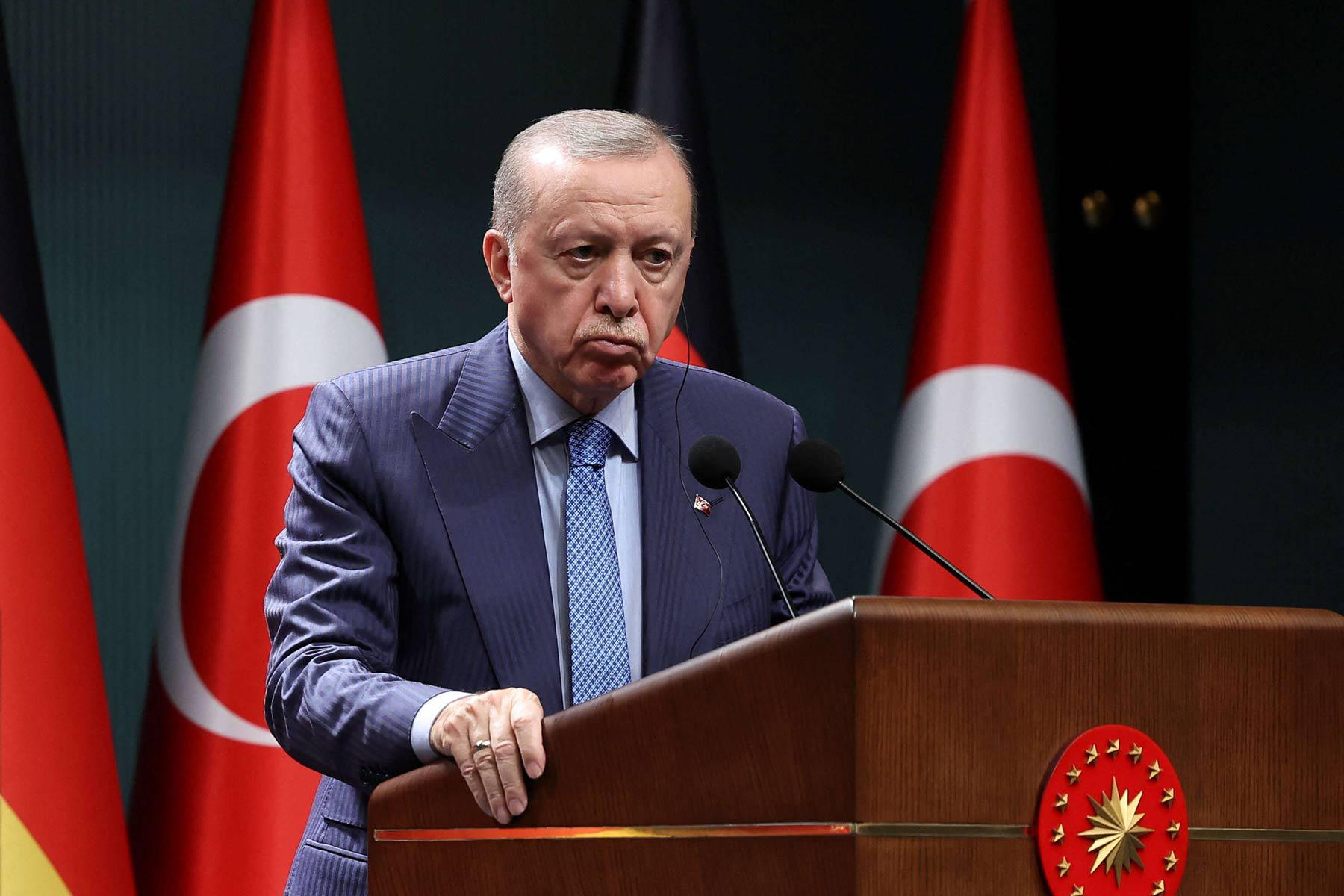
Once the military operations began, President Erdoğan described the American and Israeli attacks on Iran as a flagrant violation of international law and personally conveyed his condolences to the Islamic Republic after Khamenei’s death. Parallel to this, however, Ankara openly criticised the Iranian retaliatory attacks against the Gulf states, and Minister Fidan described that decision as ‘incredibly misguided’. With this dual reaction, Türkiye made it clear that it rejected the war but also that it was not prepared to endorse an Iranian escalation that could further destabilise the entire region.
This neutral stance was put to the test on 4 March 2026, when NATO’s air and anti-missile defence systems intercepted an Iranian ballistic missile heading towards Türkiye, presumably at the Incirlik base, after it had crossed the airspace of Iraq and Syria. Five days later, a second missile was shot down over Gaziantep, a Turkish city of nearly two million inhabitants, and Ankara reiterated that it would respond decisively to any threat against its territory. Thus, despite having tried to avoid war and maintain a formally neutral position, Türkiye had become the target of Iranian reprisals, whether misguided or deliberate.
On the other hand, Ankara rhetorically condemned Israeli attacks on pro-Iranian groups in Lebanon and Iraq, but was not necessarily alarmed from a strategic standpoint. In practice, the degradation of these actors’ capabilities could open up opportunities for Türkiye to increase its influence in those countries in the near future. However, Ankara has consistently drawn a clear distinction between attacks on Iranian agents outside Iran and direct US and Israeli strikes on Iranian territory, which it regarded as a far more dangerous threshold, likely to trigger an uncontrollable escalation.
In this scenario, Türkiye has bet on turning its equidistant position into a strategic asset, presenting itself as an actor capable of facilitating channels of communication between the parties. To this end, Minister Fidan has maintained regular contacts with the leaders of the Persian Gulf countries since the outbreak of the war, and has insisted that Türkiye’s ability to speak with all actors constitutes a strategic asset for preventing a regional escalation and promoting long-term stability. It should be noted, however, that Türkiye’s role is not that of formal mediation, unlike the role assumed by Pakistan, but rather the discreet facilitation of communication channels in a context where direct talks between the United States and Iran remain politically stalled.
The Trump factor is key in this area. The American president had already publicly praised Erdoğan during the Gaza war, saying he had been ‘fantastic’ and had helped a great deal because he was a respected figure. Similarly, the Trump administration dropped the legal proceedings against the Turkish bank Halkbank, accused of helping Iran evade sanctions, citing extraordinary national security and foreign policy considerations. This move can be interpreted as an indication that Washington anticipates needing Ankara to find a political solution to the conflict or, at the very least, to keep certain channels of communication with Tehran open.
Ankara’s deep-seated ambitions: between risk and opportunity
Behind this apparent neutrality lies a calculation of interests typical of the regional power that Türkiye is. To begin with, a weakened but not collapsed Iran is not necessarily a bad outcome for Ankara, provided that this weakening does not translate into a proportional strengthening of Israel, since the progressive erosion of Iran’s regional military network has opened up power vacuums that Türkiye can seek to fill to expand its influence over other actors in the region. This dynamic has already become visible in Syria, where the fall of Bashar al-Assad’s regime, a traditional ally of Tehran, has facilitated the emergence of a political scenario much more favourable to Turkish interests. Therefore, rather than strict neutrality, what is emerging is a balancing strategy aimed at maximising the geopolitical opportunities arising from the regional reordering.
However, this calculation has a clear limit. If Iran were to end up as a failed state, Türkiye could have to face massive migrations, severe destabilisation of its eastern border and possible ethnic-based civil conflicts arising from the collapse of the Islamic Republic. For this reason, it is important to emphasise that the optimal scenario for Ankara is not a regime change in Tehran but a weakened yet functional Iran, capable of maintaining effective control over its territory and of avoiding a systemic crisis that would have direct effects on Türkiye’s national security.
In any case, the potentially most transformative dimension of the war for Turkish interests is the one that is projected onto the Gulf states. The Iranian attacks on these countries have not only called into question the United States’ ability to effectively guarantee their security, but may also facilitate Ankara’s deepening its strategic cooperation with Saudi Arabia and the other Gulf monarchies after a long period during which relations were broken. It should be kept in mind that these states will not abandon their relationship with Washington, which remains the central pillar of their security architecture, but it is foreseeable that they will pursue a strategy of diversifying alliances that has already been taking shape in recent years. In this scenario, Türkiye emerges as a particularly well-positioned actor for several reasons: it maintains a permanent military base in Qatar; it has signed a Comprehensive Economic Partnership Agreement with the United Arab Emirates that aims to generate over 40 billion dollars in non-oil bilateral trade; Saudi Arabia and the Emirates are among the main clients of the Turkish defence industry; and Ankara is negotiating a free trade agreement with the Gulf Cooperation Council as a whole.
The most revealing example of this trend is the KAAN combat aircraft programme. Before the outbreak of war, Riyadh and Ankara were already in an advanced stage of negotiations to arrange Saudi participation in this programme, with scenarios ranging from the purchase of around twenty aircraft to the acquisition of up to one hundred units with local production. The Saudi interest in the KAAN is explained, in large part, by the frustration accumulated since 2012 at the inability to access American F-35s, as a result of the political and strategic veto that Israel has exerted over the sale of the most advanced versions of this aircraft to Arab states to maintain Israel’s qualitative military edge in the region. A Saudi order of this magnitude would have a twofold consequence. On the one hand, it would reduce the programme’s unit cost and allow the KAAN to become a serious global competitor in the fifth-generation fighter jet market. On the other hand, it would offer the Gulf states a path to strategic autonomy from Western suppliers, who do not always prioritise the region’s interests over their own political, diplomatic or security considerations.
The KAAN, however, is only the most visible part of a broader trend. The war has also accelerated Arab states’ interest in other segments of the Turkish defence industry, especially drones, anti-drone systems and the lower tiers of air defence. Iranian missile and drone attacks on the Gulf states have shown that expensive, sophisticated systems such as the American Patriot or THAAD are not always sufficient to counter large amounts of low-cost projectiles and drones. It is in this intermediate space that Türkiye can offer significant added value: more affordable systems, faster delivery times, greater flexibility in purchasing conditions and, above all, a greater willingness to transfer technology or facilitate co-production schemes. In this regard, the development of the Steel Dome project —which integrates short-range systems such as the Korkut, electronic warfare capabilities, lasers, Hisar missiles, and, in the future, the Siper system with anti-ballistic capability— could make Türkiye a particularly attractive supplier for states seeking to reduce their exclusive dependence on the United States without being left unprotected against low- and medium-intensity threats
Therefore, the most general trend is that the Gulf states will remain linked to the United States, but will hardly ever again rely exclusively on the American security umbrella, as their strategy will likely involve layering different levels of cooperation with external actors. For Ankara, consolidating itself as one of these alternative security providers would represent a qualitative jump in its regional projection, allowing it to become a structural pillar of the new security architecture of the Gulf and the Middle East, with political, military and industrial implications that would go far beyond the immediate value of contracts. It is in this context that the Turkish attempt to promote a closer coordination framework should also be placed, not only with Saudi Arabia, but also with Egypt and Pakistan. As has been evidenced in several recent diplomatic contacts, this initiative responds to the desire to articulate a regional cooperation space capable of managing security challenges with less dependence on Western frameworks. However, factors such as strategic divergences regarding Iran or the asymmetry of military capabilities among the states involved make its future implementation difficult.
However, all these potential gains run up against an obvious limit, insofar as whatever Türkiye might gain as a result of a potential weakening of Iran and the strategic diversification of the Gulf states could be neutralised if Israel consolidates a hegemonic position in the regional order that emerges from the conflict. In Turkish strategic thinking, the possibility of a future confrontation with Israel is no longer perceived as a remote hypothesis. On the contrary, Ankara is taking the hostile rhetoric emanating from certain Israeli quarters more seriously and is preparing for a scenario that, in the eyes of many Turkish policymakers, would no longer be unthinkable. In this sense, the main problem for Türkiye is not just the weakening or survival of Iran but the possibility that a total defeat of the Islamic Republic’s regime could end up opening the door to a regional order that is excessively favourable to Israel.
This is, probably, the central point of the Turkish calculation. Ankara can accept a weakened Iran, as long as this weakening does not result in an unchallenged Israeli hegemony. Similarly, Türkiye can benefit from the partial disintegration of the Islamic Republic’s regional network, as long as it does not create a vacuum that would end up being exclusively occupied by Israel, and can take advantage of the insecurity of the Gulf states to deepen its presence on the condition that this new position does not expose it to a confrontation with the Jewish state under unfavourable conditions.
Therefore, what Ankara needs the United States to manage is the confrontation with Iran without triggering a contagion effect that directly affects Türkiye’s security. Moreover, it also needs Washington to contain Israel and prevent its military superiority from ultimately positioning Türkiye as the next major rival to be neutralised. This logic also explains the importance Ankara attaches to political signals from Washington, such as when Trump publicly urged Netanyahu to be reasonable in his disagreements with Türkiye. However, the American president’s unpredictability makes it impossible to guarantee these objectives in the long term.
Conclusion
The war that Türkiye sought to avoid remains open, albeit with a ceasefire in effect. Nevertheless, true to a tradition of strategic pragmatism, Ankara is already working to become an indispensable actor in the peace currently being negotiated. It does so through its position as a potential diplomatic facilitator between Washington and Tehran; through the expansion of its defence industry into the Gulf states; and by projecting itself as a power capable of helping shape the new regional security architecture. The main question, therefore, is not just which Türkiye will emerge from this, but also which Israel will emerge from the war, and whether the new regional balance will allow the coexistence of two powers that increasingly explicitly compete for the same strategic space.
Daniel Roldán is the editor-in-chief of the CGI. He is a specialist in the European Union and the Middle East.
The opinions expressed in this publication are those of the authors alone. They do not represent the views and opinions of the CGI or its collaborators. The designations employed in this publication and the presentation of the material therein do not imply any expression of opinion whatsoever on the part of the CGI concerning the legal status of any country, area or territory, its authorities or concerning the delimitation of its borders.